Showing posts with label research. Show all posts

Sunday, 6 August 2017

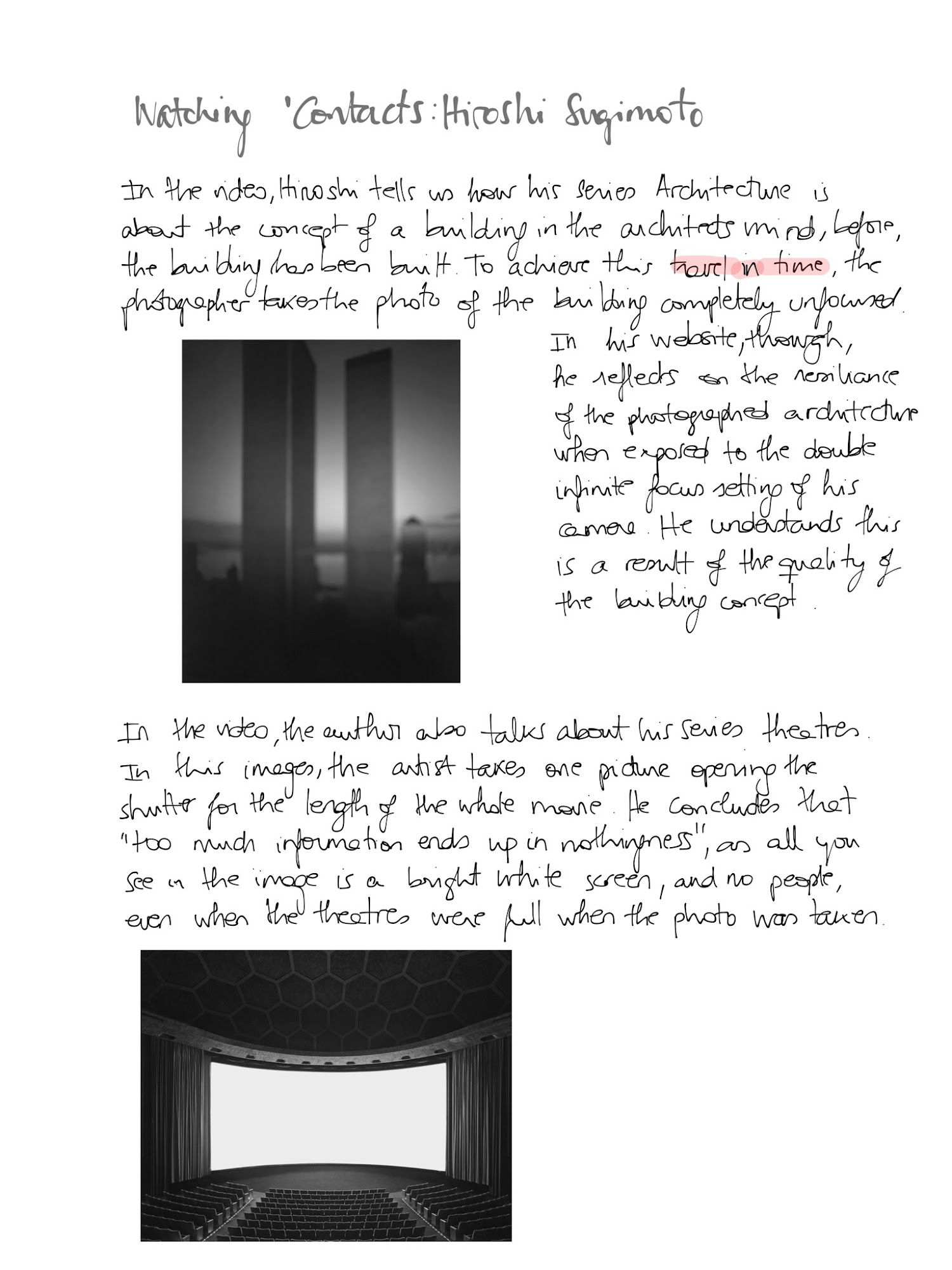
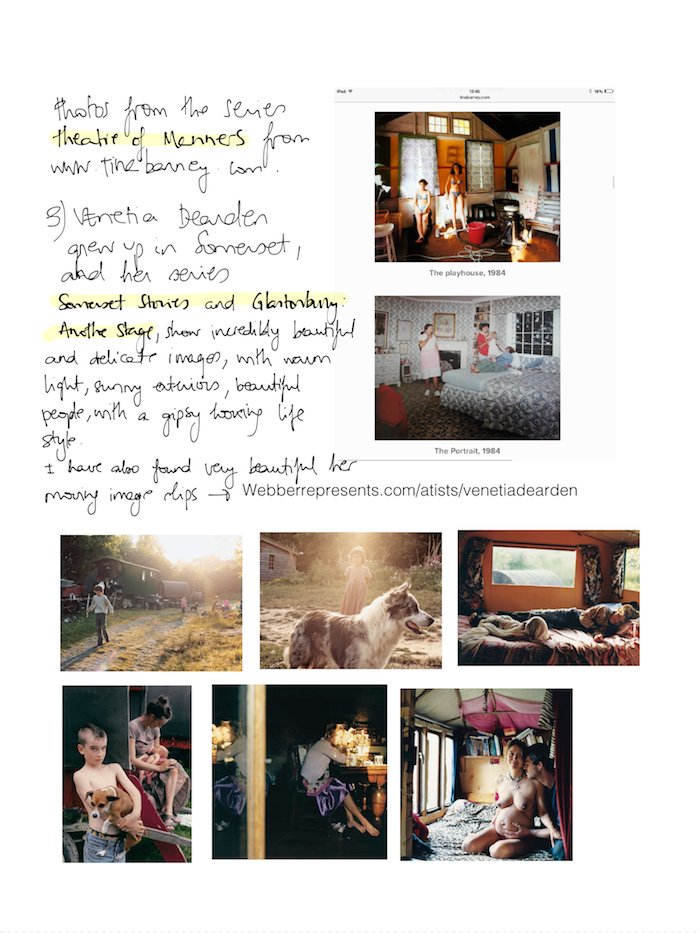
Hiroshi Sugimoto


References


En.wikipedia.org <http://en.wikipedia.org>. (2017). Hiroshi Sugimoto. [online] Available at: https://en.wikipedia.org/wiki/Hiroshi_Sugimoto [Accessed 6 Aug. 2017].


Guggenheim.org <http://guggenheim.org>. (2017). [online] Available at: https://www.guggenheim.org/artwork/artist/Hiroshi-Sugimoto [Accessed 6 Aug. 2017].


Hiroshi Sugimoto. (2017). home. [online] Available at: https://www.sugimotohiroshi.com/ [Accessed 6 Aug. 2017].


Friday, 30 September 2016

Eduard Burtynsky

Bibliography

The Guardian (2016) Edward Burtynsky’s corrupted landscapes – in pictures. Available at: https://www.theguardian.com/artanddesign/gallery/2016/sep/15/edward-burtynsky-corrupted-landscapes-aerial-photography-in-pictures (Accessed: 17 September 2016).


Wednesday, 14 September 2016

assignment 2 - collecting - research


Bibliography

Alex Prager captures the face in the crowd | photography | agenda (no date) Available at: http://es.phaidon.com/agenda/photography/articles/2014/january/24/alex-prager-captures-the-face-in-the-crowd/ (Accessed: 14 September 2016).

Badger, G. (2014) The genius of photography: How photography has changed our lives. London: Quadrille Publishing.
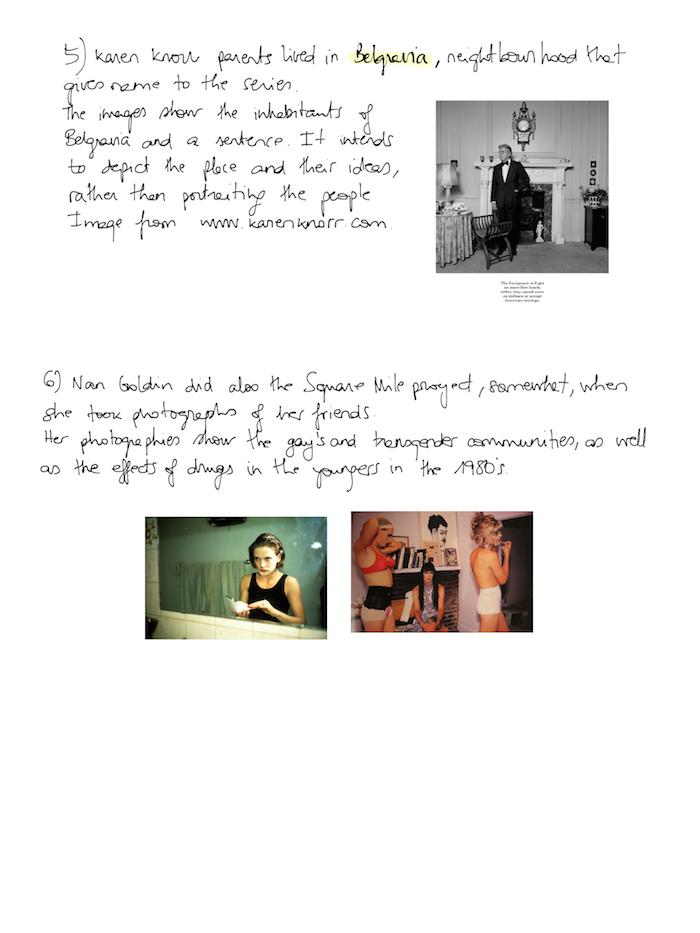
Erwitt, E., Sayle, M. and Flowers, C. (2003) Elliott Erwitt snaps. London: Phaidon Press.

Ronk, L. (2013) Lisa Larsen’s curiously intimate crowd photos. Available at: http://time.com/3876852/life-photographer-lisa-larsens-curiously-intimate-pictures-of-crowds/ (Accessed: 14 September 2016).


Friday, 24 July 2015

amazing images by Jeremy Cowart

I follow Jeremy Cowart in facebook, and he does not always shares his profesional work as much as his experiences and feelings/thoughts, but from time to time, he shows us freaking good images like the ones in this post. He has edited them with some colour. You can see the movement, the elegance, and the colours are really powerful. 


Friday, 8 May 2015

project 13: non-diegetic sound

Non-diegetic sound is the sound that does not belong to the scene in a natural way. It is not ambient, or speech. Sometimes is music or voice over, sometimes can be abstract sound to generate mood.

Try to find some examples of the following:

  • Intentional confusion of diegetic and non-diegetic sound - In There's Something About Mary many of the scenes are introduced by what could be a musical narration, that is in reality two guys singing the songs, initially outside the frame, but then you see they're in the scene, in a tree branch or similar. 
  • Sound that is hard to identify as either diegetic or non diegetic - In Chef, when Martin (John Leguizamo's character) is cooking for the first time in the van, there's what would seem like non-diegetic music, but then he's dancing at (what seems) the rhythm of the music. 
  • Music (non-diegetic) used to identify social and cultural references - In Gandhi film initial scene, when they show Mahatma Gandhi's assassination, the music is indian. 
     
  • Music and other non-diegetic sound used to create, for example, atmosphere, tension and emotion
  • Non-diegetic sound that sets the pace of a scene
  • Non-diegetic sound that give clues or cues to action
      A bit of cheating here... I'm going to use the same two scenes for the three examples above.


In these scenes of 2001 Space Odyssey, we can see how the weird futuristic sounds set the scene for tension and mystery (creates atmosphere) when the apes find out the out-of-the-way object, and the music gains in intensity to grow with the scene (sets the pace). 
In the last scene, when the ape "discovers" the tool, the music is giving the cues for action. Is the music (and the slow motion) that emphasises the uniqueness of the moment. This is, probably, the most obvious example that one can find!