Showing posts with label viewing. Show all posts

Saturday, 17 October 2015

project 17 - time

Choose a non-linear narrative and try to devise a diagram of the narrative structure. 

I have watched Reservoir Dogs, and the graph below shows real time vs movie time:


The narrative moves between the events pre and post the robbery. We don't get to see the actual moment when they get the diamonds. First scene is just before the crime, then we move back and forth to events before and after that moment.
It is done in a way that makes it easy to follow, nicely signalised mainly by the places where the events take place. Most of the scene After the robbery are filmed in a warehouse, them dressed in black suits. Before the crime both the clothing and the scenarios change.

Examples of time contracted and expanded.  

Expanded time example
Amelie finds out who is the mysterious man that collects rejected photos. Tension builds up as he approaches the photo cabin, and we can see how time slows down and the noise of the steps is audible everywhere.


The plastic bag scene in American Beauty lasts 3min approximately. We can see a plastic bag dancing with the wind. The music is a huge part of it, making this rather simple scene be emotive and beautiful.


Also in American Beauty the scene where Mena Suvari is cheer leading and Kevin Spacey imagines her dancing for him only, we can see how everything slows down and then speeds up back to reality.

Contracted time example
Forest Gump runs for three years, and we are told in a sequence of a bit less of 7 minutes. The link between the scenes is the voice over and the images of him running, his beard and hair growing.


THE example of time contraction would be Boyhood. Richard Linklater recorded this movie for twelve years, where we can see Mason's life. When I went to the cinema to watch it I did not have a clue about this, and it did amaze me. Not that I think the movie is anything particular aside this, as nothing really happens in the narrative, but as some friend told me... life happens.


Write a script that links two different parts of the same day. 

The family (dad, mum and two kids, 10 an 12 years old) get through the gates of the theme park. The kids go running ahead and the camera moves up to the sky. We see the sunset and the camera moves down to the ground again, we see mum and dad getting into the car, the kids are knackered in the car back seat.

Sunday, 27 September 2015

project 16 - other narratives

Documentaries can be divided in two types, those which have a story to tell and those which are observational.

Titicut Follies, Frederick Wiseman 1967

Titicut Follies is an example of observational documentary. The director and a camera man got invited to film the mental institution in the 1960s and edited a marvellous and appalling movie. Not recommended for sensitive minds.

The narrative can be summarised as below:


Intro: we see a show. We can see it is a bit awkward, the performers do not show fully comfortable and the show is somewhat childish.  
1st part: Shortly we see this must be some mental institution or penitentiary. We see how the inmates are ordered to strip out. The documentary continues as we see the different protagonists, the psychiatric of the institution, who is very unprofessional and judgemental, the guards, who frequently verbally abuse and bully the inmates.  
Break: A short break shows more images of the show, where the policeman also act.  
2nd part: In the second part the stories continue. Particularly shocking is one of the last stories, when the doctor force feeds a man who has not been eating. We can see how the doctor intubates him, smoking, with the but of the cigarrette almost falling. The shot is cut with scenes of a man being shaved - this is very weird in a first instance, why this shot so suddenly? - then the force feeding continues, being cut by the shots of the other man cleaning and preparing the other man. Then you realize the other man is dead! it's being prepared for his funeral... and you also realize it is the same man tha is being force feeded. 
The documentary ends with the end of the show .  


The documentary is built up around the amazing story of Sixto Rodriguez, a singer in the 1970s. 
The director must have heard about the story and wants to tell us, unfolding the information carefully and misleading us to assumptions, to then surprise the audience at the end (or rather second half of the movie). 


INTRO - We see a man in a car, driving by a cliff, music is on and he's singing. He is in Cape Town and says that song was important for him in his youth as he was nicknamed Sugar after that song. He says the song is from a singer in the 1960that dramatically killed himself on stage 
BACKGROUND USA - The image changes to Detroit, and then immediately they place you in the past and you hear the story about Rodriguez. How he was discovered, how talented he was.  
His history is told with a mix of his songs. 
Decadence, then first record,really good, but he never got success in the USA. 
BACKGROUND SOUTH AFRICA- They move you back to South Africa, they tell you how they think the Lp arrived there, how successful and important for the young and revolution their songs were "anthem for a revolution". The man for them was a mistery. They show how he was censored by some radios. 
INVESTIGATION - Back in present Sugar begins to be curious about who he was, where he was from, how he died (legend says he shoot himself, or he burnt himself on stage). They begin an investigation. How was publishing his songs in Africa, where was the money coming? 
Following the labels they end up calling people who knew him in 1997. 
They find out he was alive!!  
AFTERMATH - So they begin to tell the story of him nowadays, we meet his daughters, they end up paying a flight for him to South Africa, make a concert, we meet Rodriguez, he goes to TV shows and gives interviews… 
END - The story ends up saying how things have not changed much economically for Rodriguez, as he has seen little of the money of the previously sold records in Africa, and has shared the money he has make visiting SA. Very happy / sour story. 


Sunday, 13 September 2015

project 15 traditional narrative - viewing

I've seen two older Hollywood classics to analyse the three act narrative:
Act 1, beginning that establishes the background and introduces the characters. It is in equilibrium and the intention is informative.
Act 2, where climax builds up and events unfold. Act 2 usually brings threads together and generates more complex plots.
Act 3, the end, the final resolution plays out and everything returns to an equilibrium.

CASABLANCA


Casablanca is a very good example of the three act approach to narrative. The narrative is broken by a flash back in the middle of Act 2, but aside from that, the pattern is mostly followed. 


As opposed to Casablanca, The Big Sleep has a quite complicated plot. I had actually to read out the wikipedia storyline before finalising the exercise. The three acts are somewhat followed, and we can easily identify a first act, until the action (and the music) rump up. There is a "false" act 3, where detective Philip Marlow gets paid for his services and apparently the film is coming to an end, but then the plot complicates even more until the very end, where we find a very short and not quite closed act 3. 


Monday, 3 August 2015

project 14: camera movement

Find 6 examples of moving camera work

House of Cards, series 03, episode 13.

Minute 16, Clair Underwood gets into her bedroom after leaving his husband's campaign. In the background, you can hear Frank's speech in the background while the camera follows Claire in the room. She walks to the bed side table and leaves her rings, then turns and goes back to close the door. Then the speech is silenced.
The scene works brilliantly both with the diegetic sound (from a different image than the one we are seeing) and the camera movement.

I have not found a video to show it, some screenshots shown below.

Harry Potter and the Goblet of Fire

Harry and their friends are running to the boot that would be used as a transporter. The camera moves to become the main element in the screen after following the characters in their walk through the hill.
Lauryn Hill, Everything is everything video.

The whole video is recorded with movement, following the people walking in the streets ad the cars, as the city happens to be an LP disc plate.


La Isla Mínima

In this scene from La Isla Mínima we can see a pan camera movement from the inside of the car. The camera, located in the backseat, follows a guy from the front seat who gets out of the car and goes to open the boot. In the boot there are geese who get in the frame. We can see another guy at the distance who was supposedly also in the car, and calls the guy the camera is following. 
The Wolf of Wall Street 

In the scene when Jordan Belfort gets his first job in Wall Street, and they begin to call the clients, you can see the action. A zoom in to a telephone while someone is dialling helps to feel the fast pace of the scene. 

Sex and Lucía

In Sex and Lucía's last scene we can see how while Nadjwa Nimri get's closer to the photo of her daughter, the camera POV changes to subjective. The camera keeps closing into the photo of the girl, and suddenly we are in a different scene, when the photo was taken (in the past). The camera then zooms out of the girl and tilts to show the building, where Lucía would be singing in the window. 


Sunday, 26 April 2015

assignment 2 - feedback and reflections

I have received the feedback from my tutor, Robert Enoch, on assignment 2. In summary:

Well done:

  • confident use of lighting and composition - This is a good improvement from the feedback received in assignment 1 about the use of lighting. 
  • Scene 2 - well edited transition scene. Good use of dark and lit sides of the images. 
  • Good use of 'absence of diegetic noise' when needed by the story.
  • Under the sheets shot - Illness really can be isolating and makes one feel overly ‘in the body’ and this shot expresses this well. Good use of your imagination here. And the fade out works well to suggest a time has passed. 
  • Last scene - excellent use of light as a symbol of health
To work on:

  • story rhythm - The film is again, as it happened in assignment 1, a bit slow. I must keep on working on length of shots to generate the adequate rhythm of the story. 
    •  The beginning is way too slow and empty 
  • narrative - The film starts somewhat strangely in an empty kitchen - away from the main story of the sick man in bed. And that disrupts your use of a ‘narrative of light’ because you needed to begin the story in the dark room and then progressively bring the light in
    • about the scene of the tea - Is this really meaningful? - No, actually it isn't. I thought it would be interesting to have an introductory shot, but, as also Robert comments, the kitchen is too 'domestic'. He's got a point, as this breaks the hospital environment I wanted to create. 
  • acting - it's nice that Robert has appreciated the acting in both assignments. This is mainly thanks to Juan, main actor. Well done Juanito! and many thanks for your help!
  • mise-en-scene - I could have improved the first scene if I had given more importance to the pills, which are in the scene but don't get prominence.
  • camera viewpoint in scene 3 - should have been modified when she takes the thermometer and when she leans forward, to keep the focus on the sick person. Keep your audience in the privileged position of zoning in on all the key actions unless is a deliberate reason to obscure it. 
  • Increase content in your Research section - so true. I should report much more my work.  
If you want to contract time in a scene, you can use either:
a) Jump cuts: cutting only the most pertinent and telling actions together.
b) Cutaways: cut away from your scene of making tea to a shot of something related, like a clock ticking. When you cut back to the scene, you have shifted the action further along: she’s finished the tea.  

Suggested reading and viewing
Mood and atmosphere is very strong in Ridley Scott's movies. He was one of the first directors to make excessive use of light and often smoke (it makes light 'visible'). 

To work on this proposal I've watched two Ridley Scott movies (the two ones available on my online TV subscription), paying special attention to the creation of atmosphere and use of light: Thelma & Louise & A Good Year.

Use of elements to "show" light
We can see some examples below of how Riddley Scott uses the elements (dust in the air, or water, or smoke) to depict the light. The result is kind of magical and not obvious if you are not looking for its effects.
Curiously see how even when he wants to film in rain, he is using rain as a way of showing the sunlight.


Edit 29/11/15 to attach copy of my tutor's report:

Saturday, 8 November 2014

viewing: light and colour - Matilda

We're asked to do some viewing in project 9, light and colour.
Firstly we need to look for sudden changes of light in a scene, and how are the changes justified or motivated.
Afterwards we need to look for use in colour to represent
  • change of atmosphere, 
  • emotion of a character
  • general mood or atmosphere or
  • a range of feelings, emotions and atmospheres.

To make things easy, I chose Matilda, which being based on a Roald Dahl novel, and targeted for all publics, seemed like a good movie to find colour and light use... and I was right.

Avoiding continuity problems
If the light changes within the scene, the spectator should know the reason of the change, otherwise it can be perceived as an error.
Some of examples in Matilda:

Day comes through the window

Someone turns off a lamp which we can see

Matilda tampers with the connection line of the school director's house

In the first and third ones we can see the reason of the light change and the light source. 
In the second image we don't see the source of the image (the window or the sun) but all is understood from the context. 

Colour
In Matilda, colour is also used to infer mood and atmosphere, as can be seen in the images below:
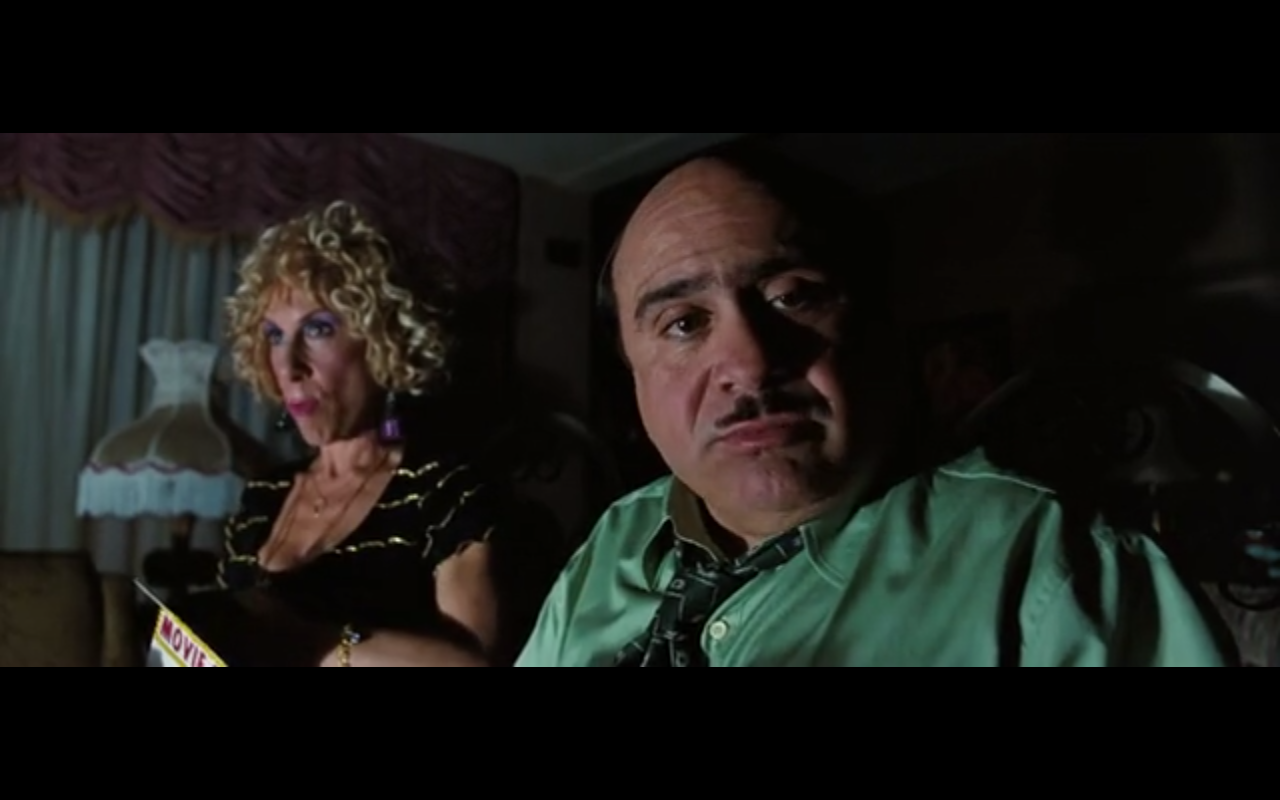
Dark colours, yellowish lights to show the bad tempered adults (though the parents of Matilda, who care little about her, are usually depicted in bright colours and tacky spaces, in situations where the mood of the scene requires it, the light is low and dark):


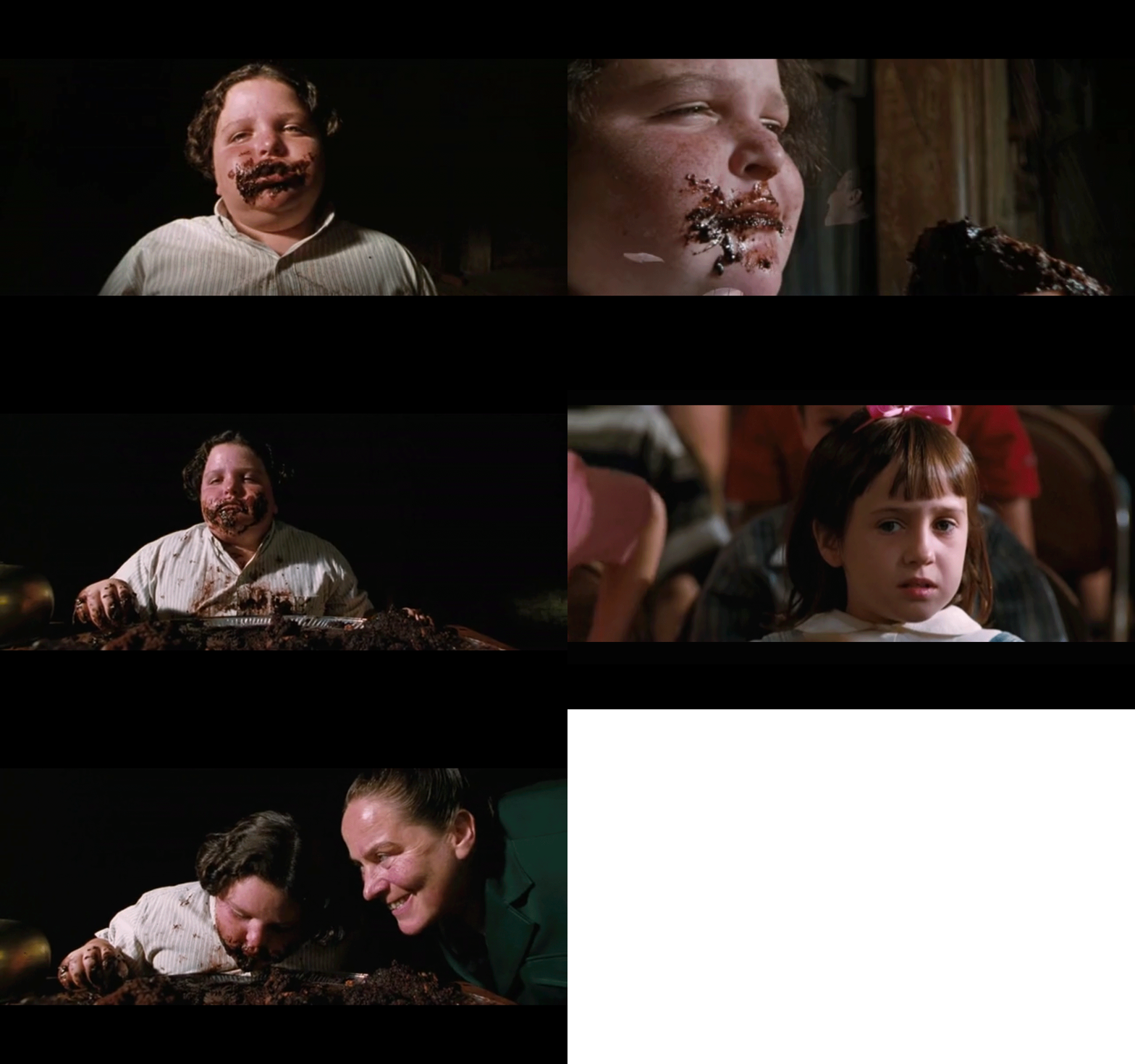
In the scene below the director of the school is punishing a pupil to eat a whole cake. The colours are dark, almost black in the whole scene, with a pitch dark background, and the only note of colour is from the students, who show hope as they'll begin to cheer the poor kid. He'll finally finish the cake, triumphant. 


Happiness is always shown with a mix of pastel colours and well lit scenes.


Sunday, 2 November 2014

viewing: balance

In this project we are learning about balance in the image, the Golden Section and the Rule of Thirds. Looking at the projects I have already done, you can see that I do use regularly the Rule of Thirds when framing, as I have studied some photography and tend to do this quite naturally now.
In the drunk subjective point of view, for example, when the drunk looks at the shelf and notices the bottle, this is located in the upper left corner of the thirds grid, to try to catch the eye of the viewer even when there are more objects in the frame.
The same happens in assignment 1; when the woman applying the lipstick, the reflection in the small mirror is also in the upper right corner of the grid; or the horizon in the last scene is also in the lower thirds line.
What I haven't done so far is breaking those rules to create tension or communicate something, as I haven't thought of the dynamic use of these compositions.

Viewing Detectorist, I found many examples of the use of the thirds to locate the protagonists, but none of the opposite use (breaking the rule examples):


As I've done in other times (here, or here) I have tried to find the specific scenes in thriller movies. Then, I've been viewing Tesis, the first movie of Fernando Amenabar. Here the director uses the change in the frame, breaking the rule of thumbs, several times (case in point below) to create restlessness.


Saturday, 11 October 2014

assignment 1 - feedback and reflections

I received the feedback from my tutor, Robert Enoch, on assignment 1. In summary:

Well done:
  • push the limits in the story
  • experiment with framing, reflections, background and foreground 
  • Last scene: "I really like this shot, the evening light, the framing of the horizon and the edge of land and sea that once again has a metaphorical value here about frontiers. But you’re doing something very special with this shot, keeping the audience waiting, thinking about these things, thinking about the woman’s situation. When the guy comes along, and just sits there silently and they slowly turn and look at each other, there’s a wonderful comic philosophical question mark hovering over the whole scene about whether this is actually what they want. It begins to bring up questions about body and soul. There is of course a mystery here about whether this guy is the one who sent the message. But in a sense that doesn’t matter, because in this context we know little about the girl either and he is only the second person we have seen."
To work on:

  • think further the different shots that might be required. At the beginning, in the shots of the received message, the woman picking up the phone, the woman tapping, why not one single shot, zooming in? 
  • Work on the flow of the scenes. In general, the shoots are too long, for instance the first scene, with the phone on the table, or the sequence of the woman putting on make up - only the action of the lipstick would have been sufficient, with a "beat" lapse of time after she closes the lipstick. "All you need is the most telling moment"
  • light and exposure. Work on lighting the scenes, not only to allow adequate exposure but also to create the desired emotional effects. 
Suggested reading/viewing
Take a movie which has a strong sense of atmosphere and analyse one or two key scenes asking the questions:

  • What does the lighting and sound contribute to the mood of the scene?
  • Is the location, set or ‘mise-en-scene’ affecting the atmosphere?
  • How do the actor’s performances and the dialogue (if present) affect the atmosphere?
  • How does the montage (i.e. the sequence of shots) develop the mood?
To work on this proposal, I've watched Her, written and directed by Spike Jonze, cinematography by Hoyte Van Hoytema. The scene I've chosen is that one when Theodore, the protagonist, has a blind date with a woman.


While they are at the bar, the date seems to be going well. They drink and chat and seem to be having fun. They are comfortable. The mise-en-scene shows a futuristic restaurante, with warm lighting, which helps to the feeling of comfort.
The lighting elements also helps to make a kind of magical, futuristic environment, as the lights seem to be floating in the background. The fill in light is warm, as are the colours of the scene, most of them yellow and red.
The curved walls create a closed, embracing feeling.
The actors are both showing that they are comfortable with their body language (see the first image above when both are leaning forward, to each other, which express interest).
The montage moves from a wide frame (first image above) to every time more close close ups, until it ends with the face only of the protagonists. This sequence does also help to move us from seeing the ambient, the environment, to perceive their feelings closer from their expressions and looks.

Edit 29/11/15 to attach copy of my tutor's report:


Saturday, 16 August 2014

exercise: mise-en-scéne - viewing


Freddie (Joaquin Phoenix) is falling asleep while he observes the master (Philip Seymour Hoffman) singing and dancing, surrounded by his family and friends. They are allocated in a way that they create an scenario, open to Phoenix, who is the spectator and Hoffman, the actor. This is created by the mise-en-scène of all the elements. As Phoenix falls asleep he "sees" (or more accurately he imagines) all the women in the scene naked. The spectator knows this is in the imagination of Joaquin Phoenix thanks to the lighting, and the sequence, as we've seen everybody dressed, we've seen Freddie accommodated in the shadows, falling asleep, and then the imagined scene with nude people, which looks clearly unreal. 
The lighting in the scene of Freddie in the shadows also depicts him in a different, obscurer world, closer to insanity.
All the elements of the mise-en-scène - i.e. settings, costumes and make up, lighting and staging - help creating this scene. 


The Third Man makes a extensive use of shadows (and dutch angles, but that would be part of the framing side studied in the previous part of the course) to evoque suspense and anguish. 
Scene 1 above shows a little child who is the greatest menace to the main character at this point of the film, as the boy accuses him of killing his father and a bunch of people is following him, after the kid, through the streets of Vienna. To show this perilous situation we can see the kid, but also the light has been positioned so he has a big, dark and defined shadow, which is definitely more threatening that the actual boy. 
Scene 2 not only uses the shadow on the building, but also the neat reflection on the wet floor, therefore the menacing shadow seems twice as big in this scene. We can also see in the foreground two statues, depicting two men probably fighting, that adds tension to the scene and have intentionally been incorporated in the mise-en-scène.
Scene 3 makes use of a dark corner (all we can see in the first instance) to hide the police men, who we only see when they step forward. 
Scene 4 shows a dutch angle of a room, which is initially in darkness. When the protagonist, who is being chased, turns the light, the image depicted above is what he can see. It is at the some time awkward and disturbing, and this has been created not only by the unbalanced camera angle, but also by the elements shown - a parrot, which is shrieking, the curtains, a kind or gown on a hanger... 
Finally, the last shot in the film, when all has been solved and cleared, depicts a wide path, well lighted, in a very symmetrical image (scene 5 above).  

It has been more easy to identify the lighting of the scenes in the two films above, the use of shadows and clear areas or darker and clearer scenes, than the position of elements to generate moods or feelings. Some of the images above from The Third Man convey a feeling just with the mise-en-scène, and it would not be needed to follow the plot to know that what is going on is rather unquieting. 

The exercise asks now to go back to Project 2 and analyse if the mise-en-scène had an (involuntary) impact on creating a mood. Definitely the third part of the exercise includes elements that create a kind of tension that would be needed for understanding the scene, mainly the black cat and the broken vase. I did not draw using shadows and lights, but I should definitely try to do that for the next sketch.   

Monday, 11 August 2014

Mise-en-Scene

Definition

"...the term (is used) to signify the director's control over what appears in  the film frame. As you would expect, mise-en-scene includes those aspects  of film that overlap  with the art  of the theatre: setting,  lighting, costume, and the behaviour  of the figures.  In controlling the mise-en-scene, the director stages the event  for the camera."
Bordwell, D. , Thompson, K. (2008), Film Art: An Introduction. 8th ed.McGraw-Hill

The mise-en-scene-en-scene does not always need to be planned, the authors clarify. Unpredicted events or actors improvisations have their own impact on the shot (natural light may be used and is unpredictable, an ocasional storm that could be used for the scene, etc.). 


The first director to use mise-en-scene-en-scene was George Méliès, who created fantasy worlds, customs, sketched every detail of the shot and edited his films in the very early 1900's. The video above is for his Le Voyage dans la Lune (The Trip to the Moon), 1902.
Within mise-en-scene we can control

  • setting
  • costumes and make-up
  • lighting
  • staging


Sunday, 23 March 2014

camera angles

Try to find good examples of camera angles used to create atmosphere or alter the meaning of a scene or shot. Consider viewpoint, relationship with the characters on screen, status of the character on screen, suspense, tension of expectation. Does it create a particular feeling or mood?

I have chosen Psycho as a clear example of the use of camera angles. 
In frame 1 shown below we can see Norman Bates and his stuffed birds from a low angle. This is the scene where we can first see that Norman mental state might not be very sane. The low angle is unnatural within the scene, but show him as a threat, emphasised by the menacing wings of the owls behind. 
The second shot, frame 2, shows Lila Crane in the shower from a high angle, and the perspective allows to see that someone has got into the bathroom. The camera angle helps to imply how fragile she is in that moment. Suspense is created as the main subject is giving her back to the peril. 
Frame 3 shows Norma Bates with a knife from a very low angle. This is again not natural point of view. Nothing in the scene would be located there to help the angle to be a POV from a subject in the scene (Lila, the shower head, Norma bates) but it makes the killer look bigger and more  frightening. Lila would be in front of Norma's character and is not shown. These scene is accompanied by the famous music that creates the terror environment. 
Frames 4 to 6 are taken from a high angle, and it is clear for the viewer how powerless is the woman against her killer. The frames are maintained very little time and there is a great deal of action. The scene achieves that viewer would feel anxious.


Saturday, 22 March 2014

powerful, emotive frames

Find some examples of powerful, emotive frames. What feeling you get and how the framing has contributed to this?

Frame 1
Jeff Wall, A Sudden Gust of Wind (after Hokusai), 1993. Image from www.tate.org.uk


The image is a very wide shot, where the landscape and the action of four people affected by a sudden gust of wind is depicted. The detail of who or how the people are is difficult to identify due to the wide frame.
The picture is hilarious in a way. It makes me feel both happy for the beauty of the moment with the objects flying around, and amazed at the same time, for the opportunity that it seems that the photograph had and cached so brilliantly. As it sometimes happens, the image is not casual, and it is actually a collage of staged pictures taken in a period of 5 months, therefore the very formal composition is not an accident.
The very wide frame is critical to give sense to the image, as the action of the wind needs to be shown from afar. A midshot of any of the will make a poor picture and the link between the elements would be lost.


Frame 2
Film The Shawshank Redemption


The character of Brooks Hatlen, played by James Withmore, has been released from prison after doing time for most of his life. He feels like a fish out of water in the outside world, and also feels lonely and miserable, what makes him decide to take his own life.
In this scene we can see how Brooks dress up, stands on a table, signs on the wooden beam "Brook was here" and then shakes the table to end up hanging in the air. I find the close up of the feet, showing some dust from the carved wooden beam, a very moving frame. It needs to be understood with the whole sequence, and possibly with the whole film, but it's a subtle and kind of poetic way of depicting the character's death, showing nothing else than his feet and a close up of his satisfied smiling face, looking at his carved message.  I feel that showing a wider frame would be less subtle and less intimate.


Frame 3
Un chien andalou by Luis Buñuel and Salvador Dali


This extreme close up, part of the surrealist short movie by the spanish artists Buñuel and Dalí, shows the detail of a man with a razor blade cutting the eye of a woman. In this frame you have seen the man sharpening the blade, and you know therefore what is in this hand. The woman looks calmly at the camera and makes a very strong, powerful (and very disgusting) image.